"I'm very impressed! You didn't just move it over to a better look and feel, you improved the marketing."
Owner, Bea's Knees FarmA good-looking website is easy to get now. AI will build you one in an afternoon. A website that turns visitors into customers takes understanding what to keep and what to cut.
When a website sells for you, I build it as if your whole business depends on it. A stranger has to find you, trust you and pay you, and you have to get each order right. That's the part of this work I care about most, and this job is a good example.
Bea's Knees Farm grows 100% Kona coffee in Honalo, on the Kona side of Hawaiʻi Island. The owner had built a site with a lot going for it: a family story that reaches back to the 1930s, years of photographs from the farm, five-star reviews, and coffee that two certified graders scored Specialty Grade. It had grown up around the farm's blog, and a buyer had to look a little to find the coffee. I kept everything that was working and gave the site one job: sell the coffee.
Giving the site a real job
The farm grows a small crop, and in some years the coffee sells out. So the site's main job is to sell that coffee to people who can't walk up to the farm, then keep them coming back. I wrote every page to sell the coffee, using the farm's own story, and every idea had one test: does it help a buyer say yes?
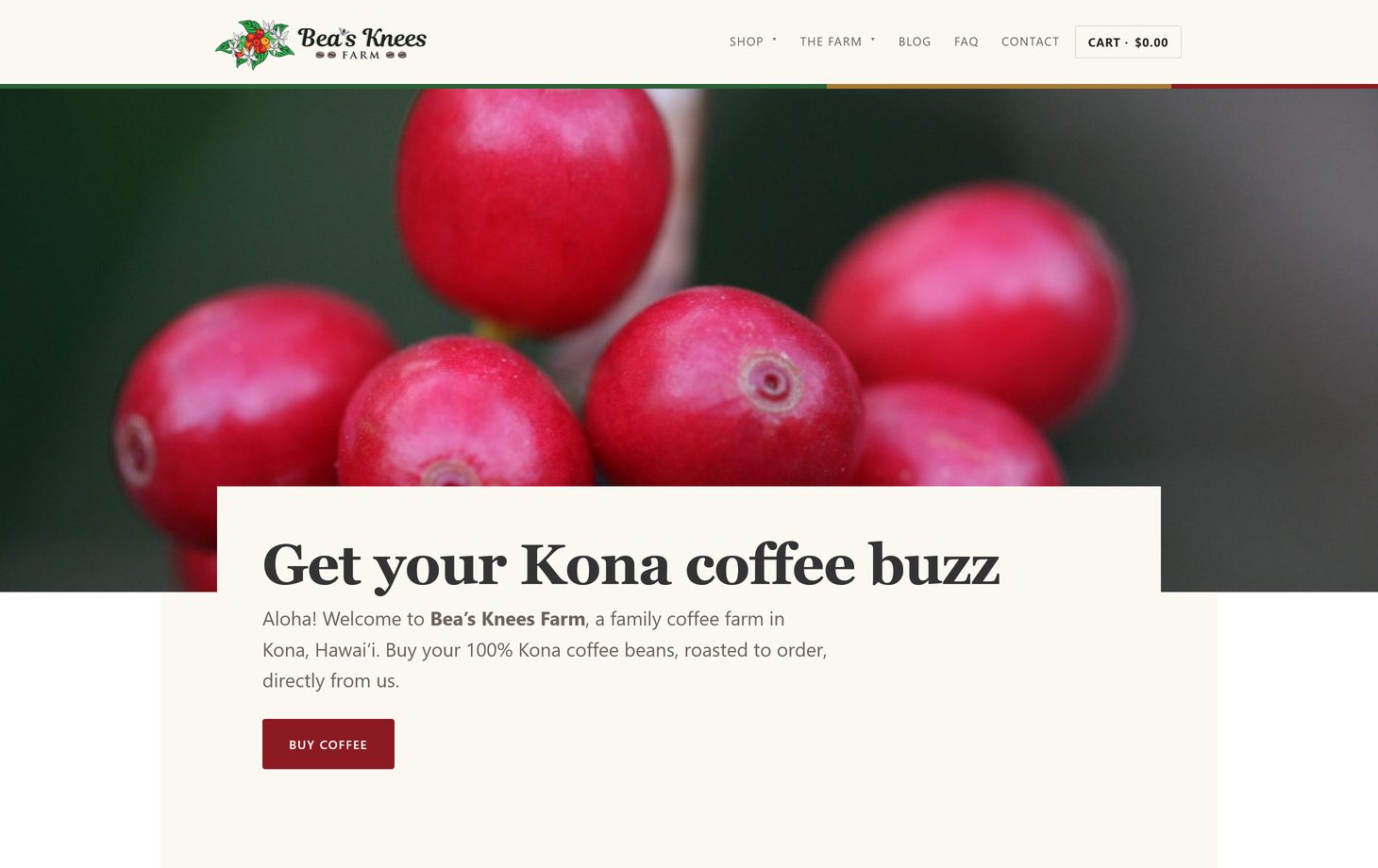
I carried forward everything the owner had built and added only what selling needed. A visitor now sees the coffee first, with the farm's story right behind it.
| What the farm had | How it sells the coffee now |
|---|---|
| Five-star reviews, spread across the product pages | Gathered together on the buying page, right where a buyer decides |
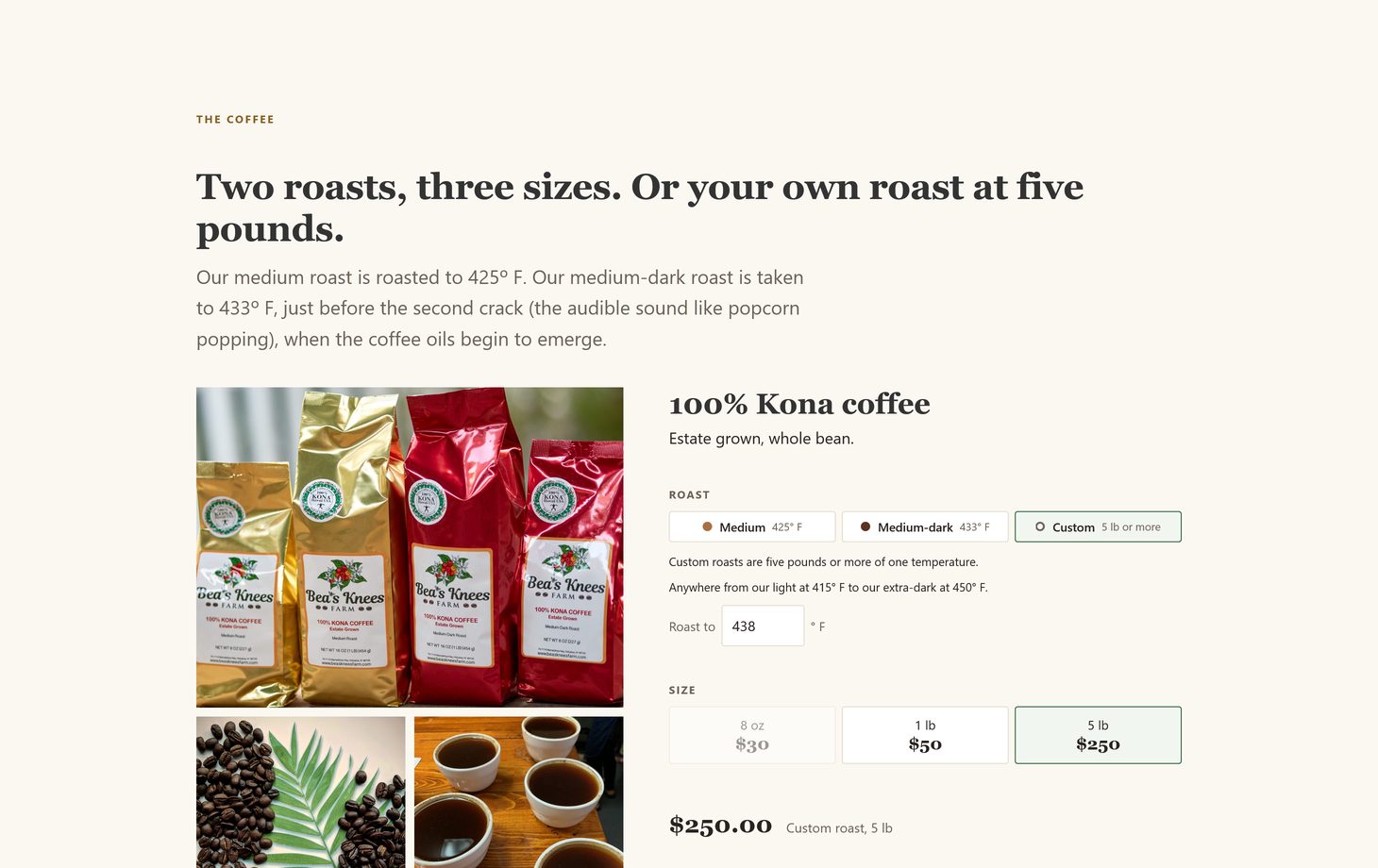
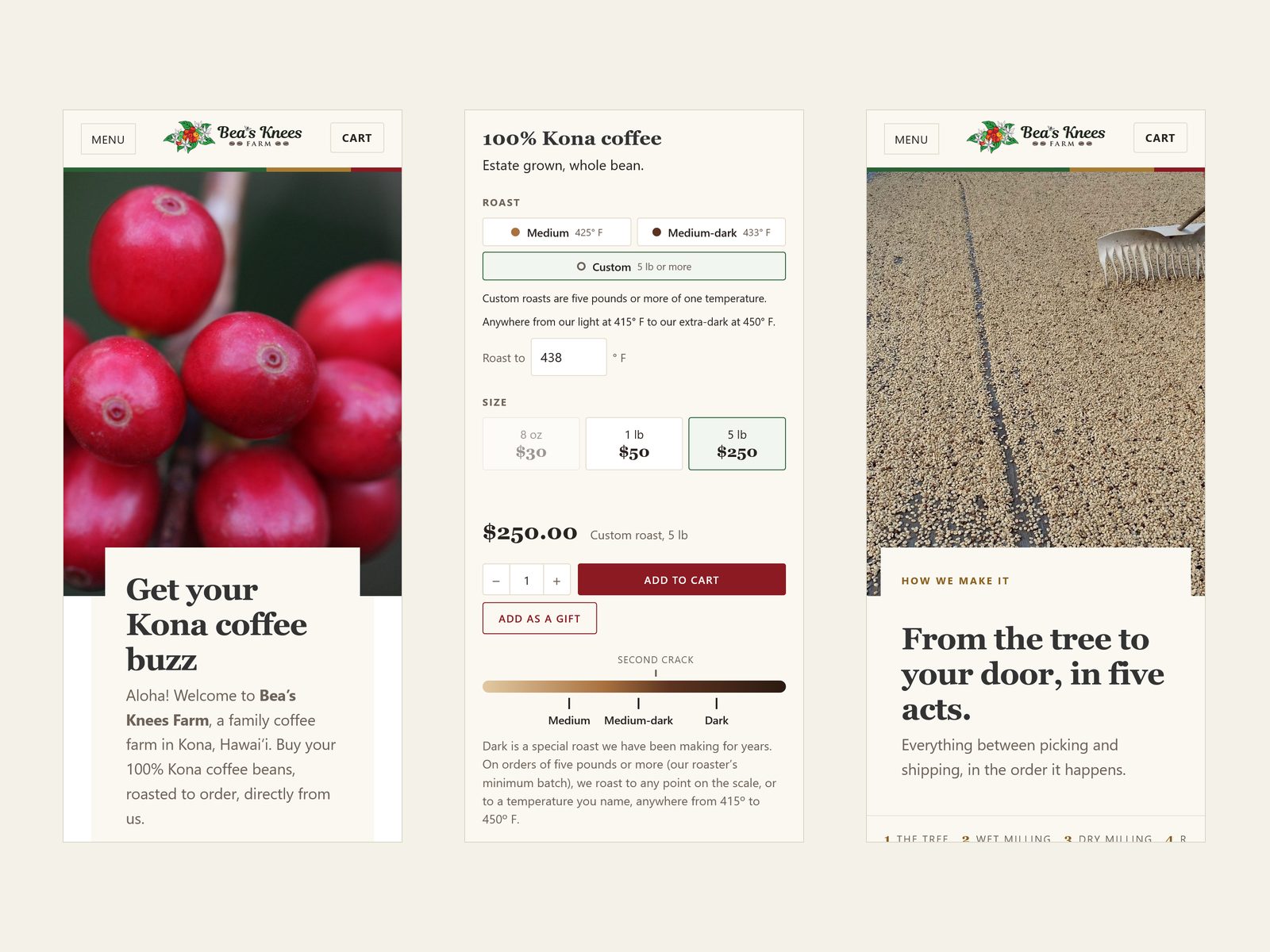
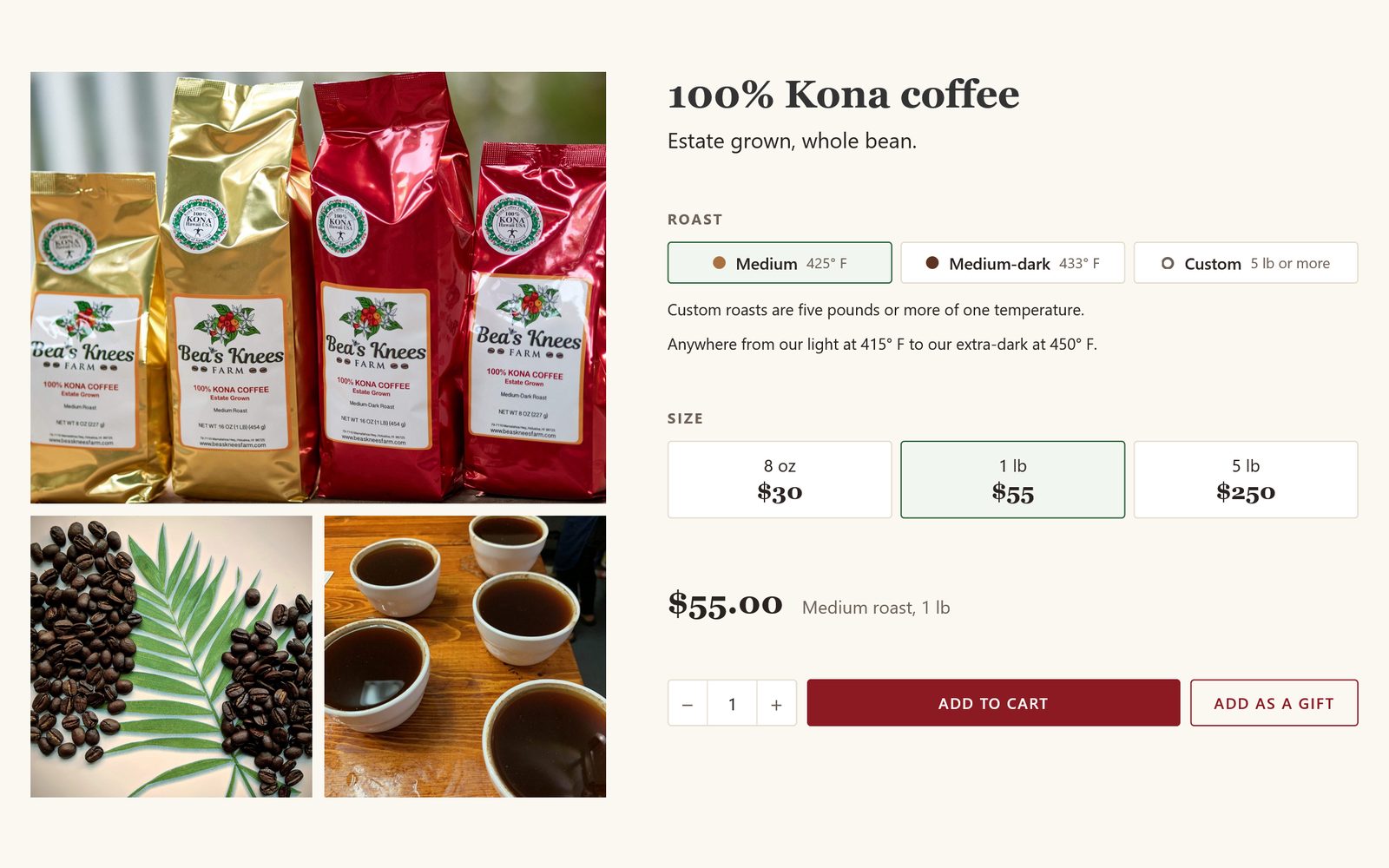
| Two roasts in three sizes, and custom roasts by request | One listing to choose from, plus a custom roast to the exact degree at five pounds and up, ordered right on the page with the right shipping |
| The farm's roast temperatures and shipping rules | Right where a buyer picks a roast and a size, so there are no surprises at checkout |
| A subscription, offered by email since 2021 | Front and center for the first time, on its own page, in the menu and on the homepage, so a one-time buyer can become a regular |
When the crop runs out, the farm keeps selling the next one. The owner flips one switch, and a sign-up for the new crop takes the place of the Add to cart button, so the quiet months still build a list of buyers waiting for the harvest.
Bringing the brand and the story forward
A buyer who meets the family, the land and the care behind a bag of coffee knows why it's worth it before they ever add it to the cart. That's why I brought the farm's brand and its story to the front, right beside the coffee.
The owner saw the new design in three colorways and chose cherry red and gold on a cream ground, the colors of the farm's own coffee bag. Every photograph on the site is the farm's, and the homepage headline is the farm's own tagline.
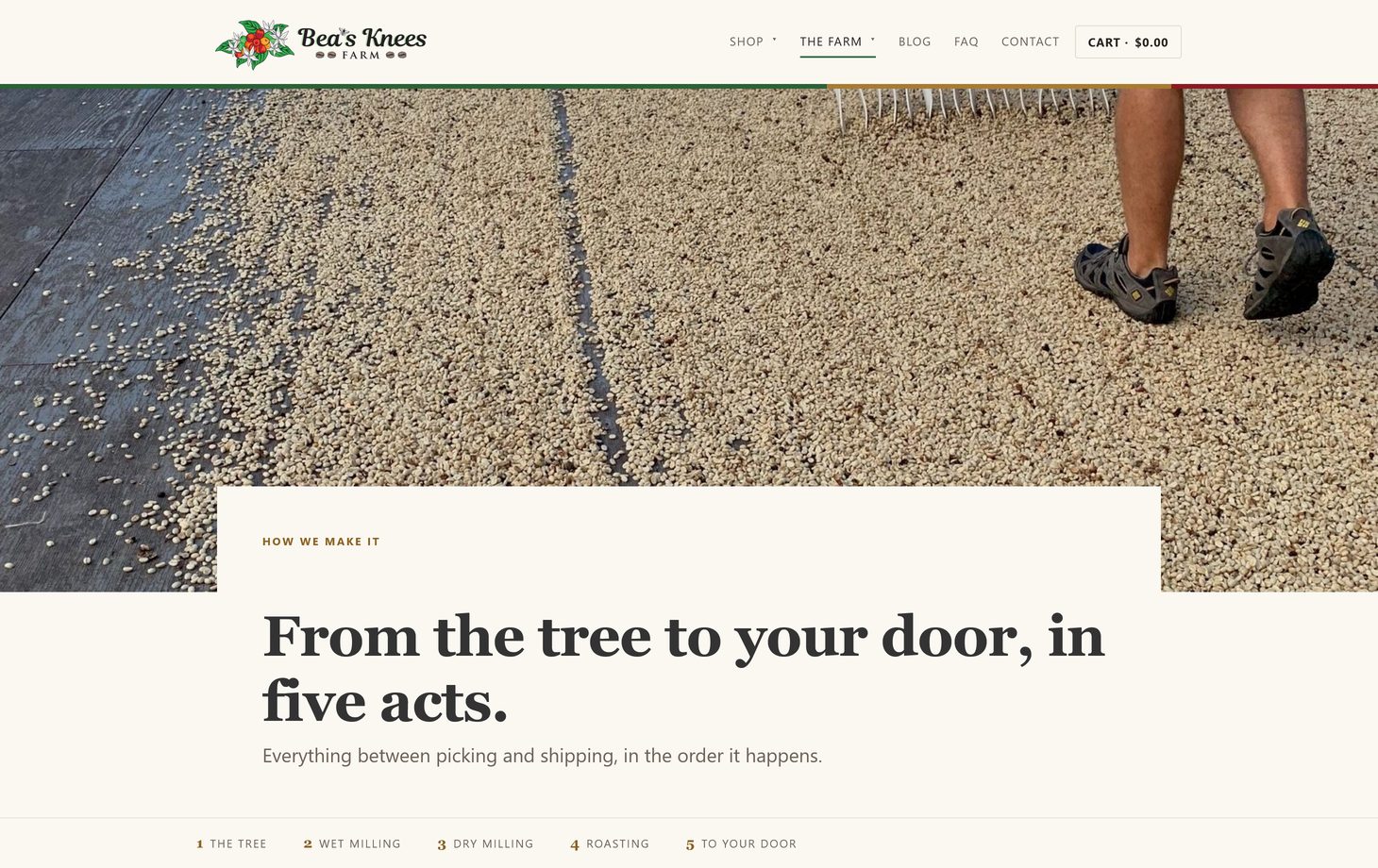
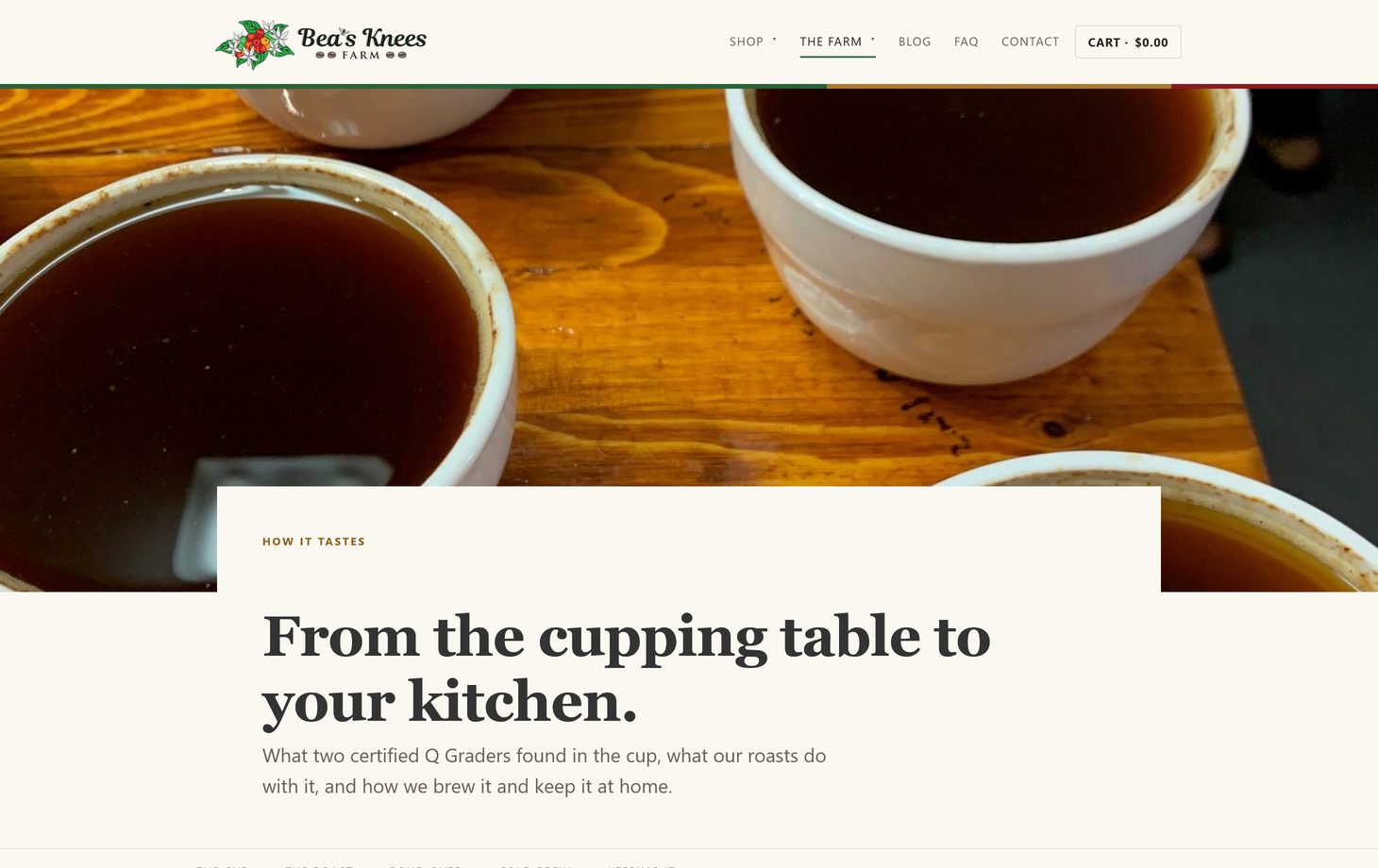
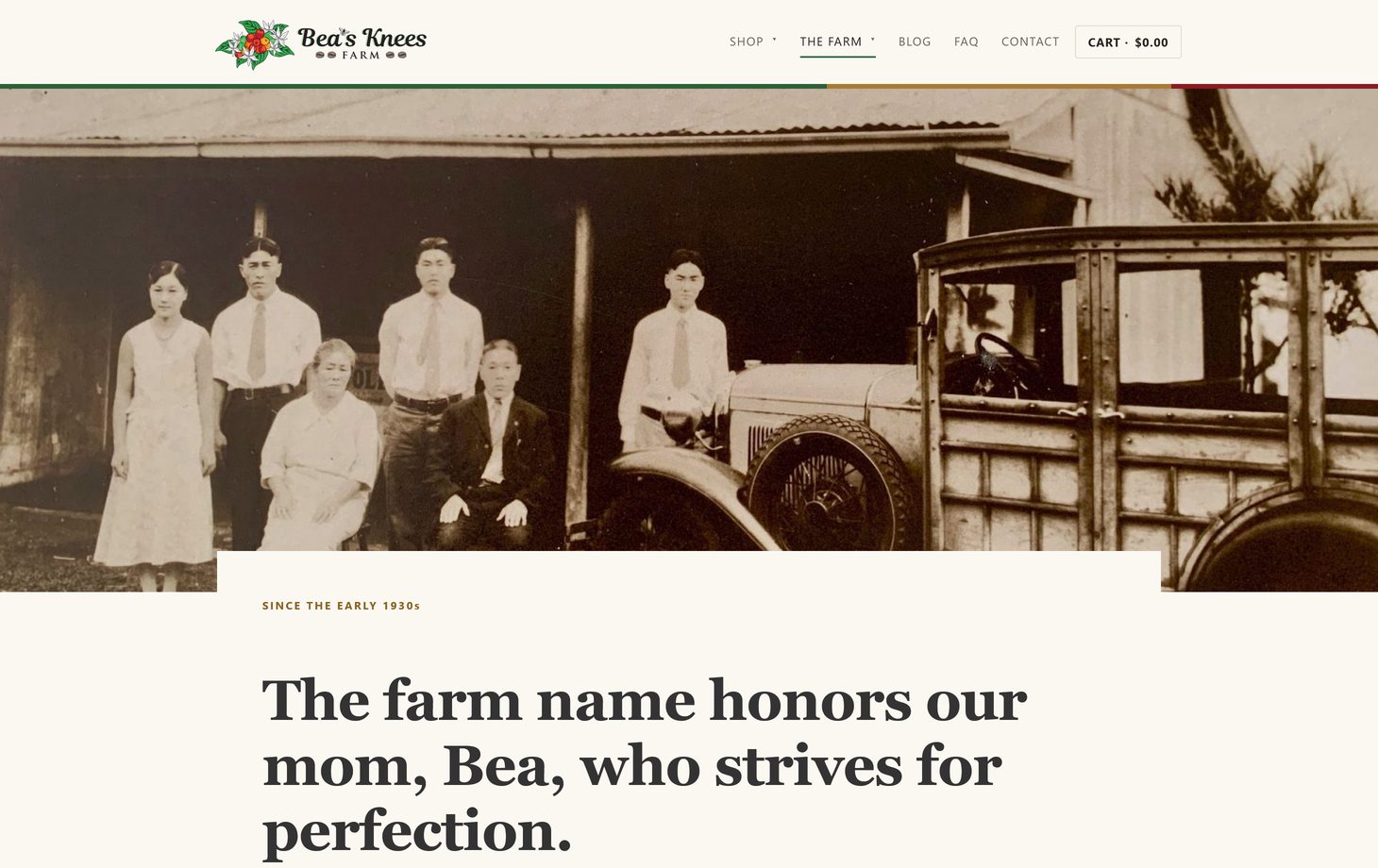
Three pages tell the story, each built from the farm's own photographs and captions. How we make it follows the coffee from the tree to your door. How it tastes opens with the farm's 2020 cupping report, where two certified Q Graders, professional coffee tasters, scored the coffee Specialty Grade with no defects. The farm page tells the family's story, back to the grandparents who planted the trees.
Why the farm stayed on WordPress
The owner has written the farm's blog on WordPress for eight years and knows it well, so I rebuilt the site on the same platform and the same theme. On a new platform they would have lost what they had built: a site they can run themselves, whenever the farm allows, without emailing anyone.
The farm kept selling from the live store the whole time I worked, and kept every review, every order and every post. A buyer with an old bookmark or search result still lands on the right page, and every rebuilt page has its own title and description for search engines to read.
My card was declined on the first live order. Yikes!
For 15+ years I tested software and websites at Nike, where my job was catching things before customers did. I tested this store the same way, from a full rehearsal of the launch to a live order on a real credit card.
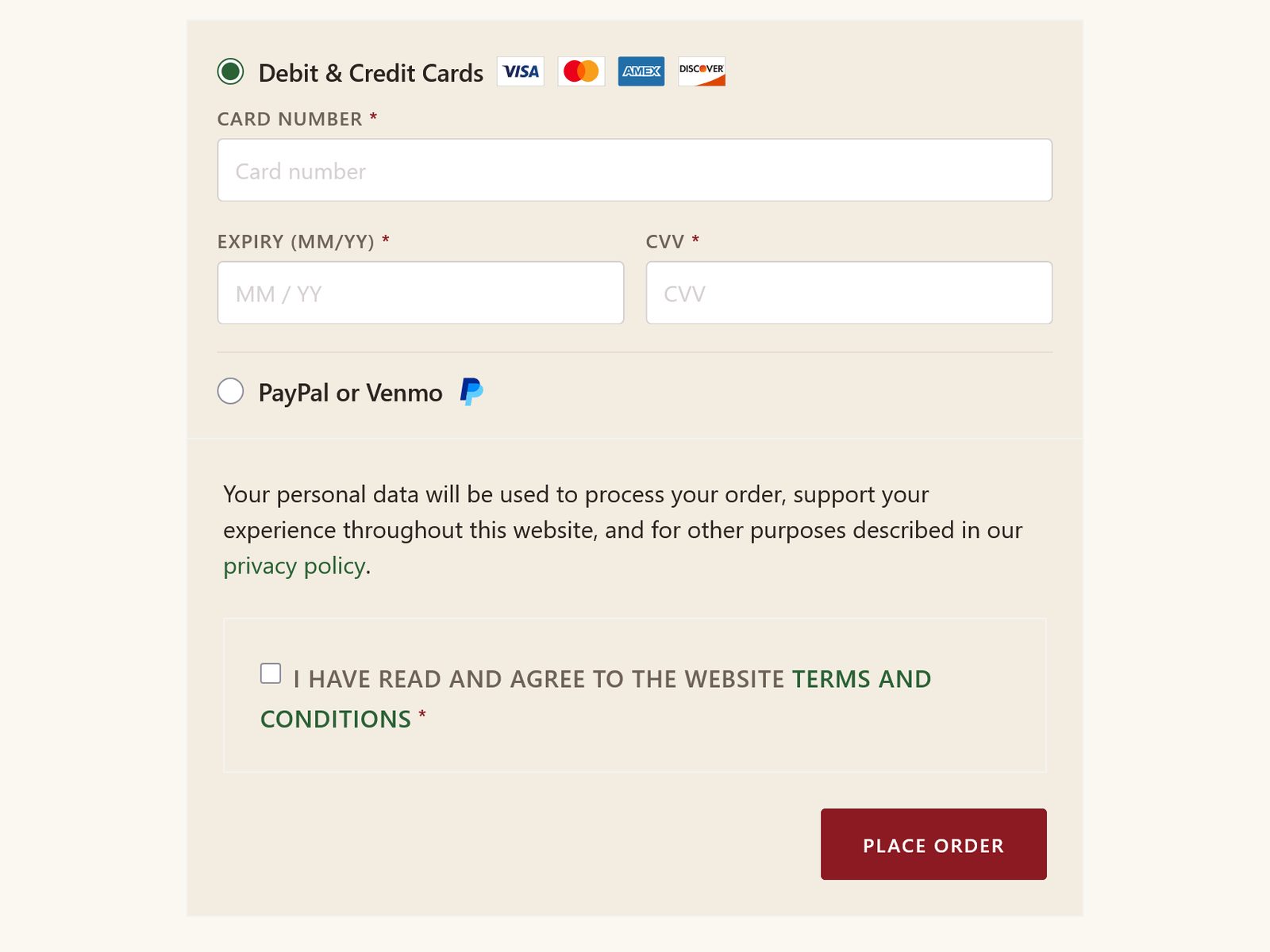
Early on, the owner asked for better ways to pay, so I moved the store onto the payment company's current plugin, adding PayPal and Venmo to the checkout, along with card payments right on the page.
When the new store went live, I bought coffee the way a customer would, and two valid cards of mine were declined. Both times, all I got was a message to try a different payment method. I knew both cards were good, so I kept digging.
My test orders on the practice checkout had all gone through, and we had everything set up correctly on our side. Before I went looking for the cause, I made sure buyers could still pay in the meantime. I switched off the card form on the checkout page, which left the payment company's own pop-up window for paying by card, and I placed a real order that way to be sure it worked.
I recorded a failed payment and found the cause in the payment company's reply: one setting on their side still had cards switched off for the site. With that switched on, I got a second decline, traced it to a known bug in the plugin, and fixed it before I turned the card form back on.
Every practice order went through. The first real one didn't, and I only found out because I paid with a real card.
I found the smaller things the same way, by using the site as a customer would. In testing I ordered a custom roast and read the email the farm would receive. The roast temperature wasn't in it, so a customer could have paid for 438 degrees and the farm would never have seen the number. The farm sees it on every order now.